


Introduction to Tetra Sodium Pyrophosphate (TSPP)
Tetra Sodium Pyrophosphate, often abbreviated as TSPP, is one of the most versatile inorganic chemicals in modern industry. Known for its excellent sequestering, buffering, emulsifying, and dispersing properties, TSPP finds its way into everything from your toothpaste and seafood to ceramics and water treatment plants. Its ability to bind metal ions, stabilize products, and maintain desired pH levels makes it a go-to ingredient in dozens of applications.
Whether you’re eating processed cheese, cleaning your kitchen, or purifying drinking water, chances are you’ve indirectly benefited from this powerful compound. In this article, we’ll explore the origins, manufacturing process, wide-ranging applications, safety measures, and market trends of TSPP — proving why it deserves its title as a “chemical for every industry.”
What is Tetra Sodium Pyrophosphate?
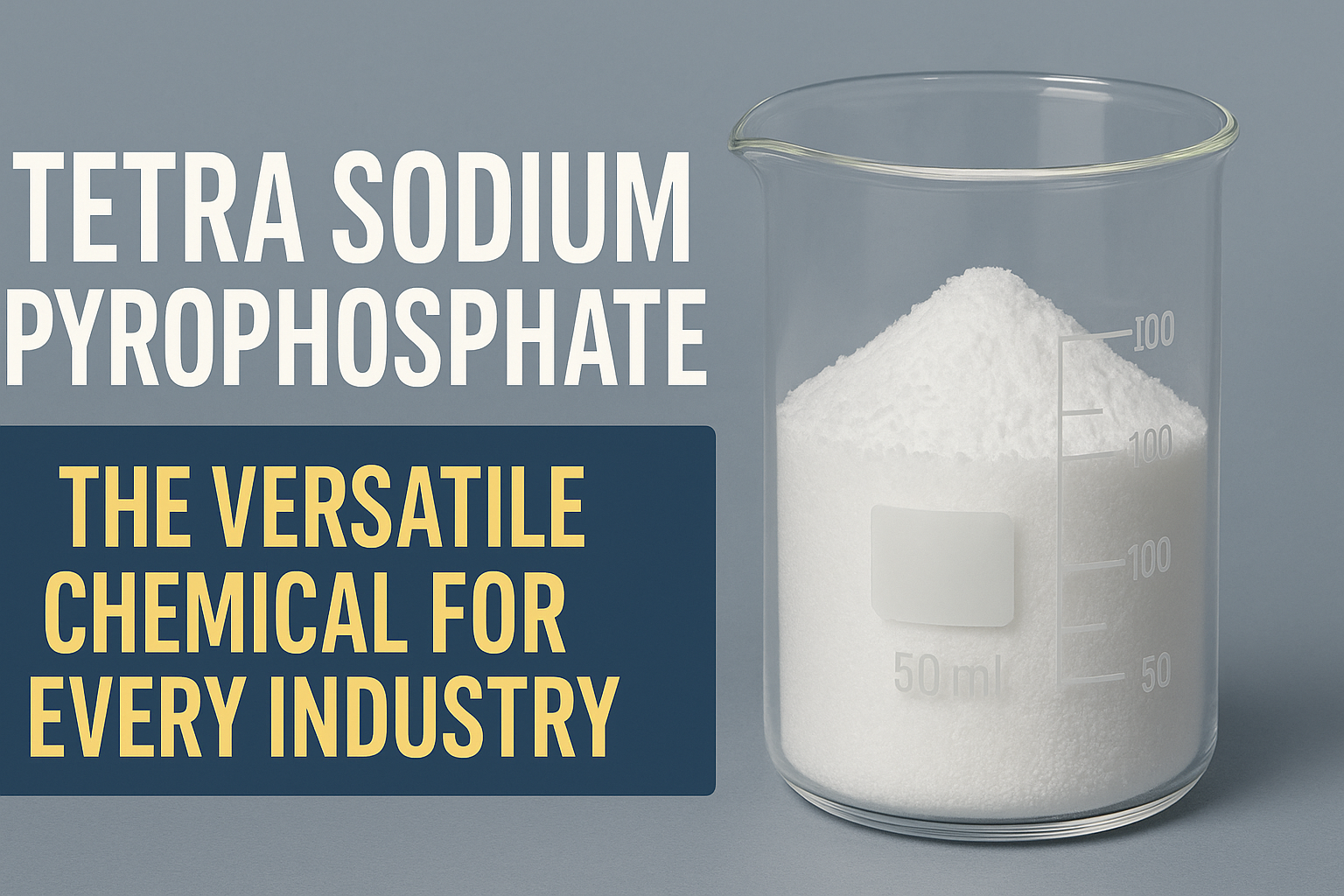
TSPP is an inorganic sodium phosphate salt with the chemical formula Na₄P₂O₇. It appears as a white crystalline powder, highly soluble in water, and is odorless. Its primary industrial value lies in its ability to act as a chelating agent — binding unwanted metal ions that could otherwise affect processes or product quality.
Historical Development and Discovery
TSPP has its roots in early phosphate chemistry, with large-scale industrial production beginning in the mid-20th century when food preservation, cleaning formulations, and water treatment technologies advanced. Over the decades, improved production methods and quality standards have expanded its applications worldwide.
Chemical Formula, Structure, and Properties
- Formula: Na₄P₂O₇
- Molar Mass: 265.90 g/mol
- Appearance: White crystalline or granular powder
- Solubility: Highly soluble in water, insoluble in organic solvents
- Solubility: Highly soluble in water, insoluble in organic solvents
- pH: Around 10.0 in aqueous solution
Manufacturing Process of Tetra Sodium Pyrophosphate
Raw Materials and Sourcing
The main raw materials include disodium phosphate and sodium carbonate, both of which are readily available in industrial quantities.
Step-by-Step Production Process
- Preparation of Disodium Phosphate – Neutralization of phosphoric acid with sodium carbonate or sodium hydroxide.
- Thermal Condensation – Heating disodium phosphate to about 450°C to form sodium pyrophosphate.
- Cooling and Crystallization – Rapid cooling to form stable crystalline TSPP.
- Milling and Packaging – Powdered to specific particle sizes and packaged for use.
Quality Control in Manufacturing
Strict testing ensures TSPP meets purity, solubility, and pH standards, especially for food-grade and pharmaceutical applications.
Key Applications in Food Industry
Tetra Sodium Pyrophosphate is widely used in the food sector, thanks to its multifunctional properties that enhance texture, flavor, and shelf life.
As a Food Additive and Emulsifier
TSPP is recognized as E450 (iii) in the food additive code system. Its primary role is to act as an emulsifier and dispersing agent, ensuring ingredients mix uniformly without separating. This is crucial in sauces, processed cheeses, and instant puddings.
Role in Meat, Seafood, and Dairy Processing
- Seafood: Helps retain moisture and prevent dehydration during freezing.
- Meat Products: Enhances tenderness and water-holding capacity, making meats juicier.
- Dairy: Prevents protein coagulation in milk-based products, improving texture.
Benefits in Bakery and Confectionery Products
In bakery goods, TSPP functions as a buffering agent, regulating pH for better dough handling. In confectionery, it helps control crystallization, resulting in smooth candies and chocolates.
Uses in Cleaning and Detergent Industry
The cleaning power of TSPP lies in its ability to soften water, disperse soils, and prevent mineral deposits.
Water Softening and Scale Prevention
TSPP binds with calcium and magnesium ions, preventing the formation of scale in dishwashers, washing machines, and industrial boilers.
Enhancing Detergent Efficiency
By breaking down mineral hardness, detergents can clean more effectively at lower temperatures, saving energy and reducing chemical usage.
Applications in Toothpaste and Oral Care Products
In toothpaste, TSPP prevents tartar buildup by inhibiting the crystallization of calcium phosphate in dental plaque. This gives consumers cleaner teeth and a brighter smile.
Role in Water Treatment and Environmental Management
Preventing Pipe Corrosion
TSPP forms a protective layer inside pipes, reducing corrosion and prolonging infrastructure life.
Controlling Water pH Levels
Its buffering capacity helps maintain stable pH levels, essential for both drinking water safety and industrial water systems.
Reducing Heavy Metal Contamination
TSPP’s chelating properties help bind heavy metals like lead and cadmium, making removal from water more efficient.
Applications in Ceramics, Textiles, and Industrial Processes
Ceramic Glazes and Tile Manufacturing
In ceramics, TSPP acts as a dispersing agent for clay particles, improving glaze consistency and smoothness.
Textile Processing and Dyeing
In textiles, it helps control pH and improve dye penetration, resulting in richer, more vibrant colors.
Metal Cleaning and Surface Treatment
Before painting or coating metals, TSPP is used in cleaning solutions to remove oils, rust, and scale.
Safety, Handling, and Storage Guidelines
Toxicity and Environmental Impact
TSPP is considered safe in regulated food-grade amounts but can be harmful if inhaled or ingested in large industrial doses. Overuse in waterways may contribute to eutrophication, a condition where excessive nutrients cause harmful algae growth.
Safe Storage Recommendations
- Store in cool, dry areas.
- Use moisture-proof packaging.
- Avoid exposure to strong acids.
Worker Safety and Personal Protective Equipment
Workers handling bulk TSPP should wear gloves, goggles, and masks to prevent irritation from dust.
Global Market Trends and Demand for TSPP
Major Producing Countries
China, the USA, and several European nations are leading producers of TSPP, supplying both domestic and export markets.
Market Growth Forecast
The TSPP market is projected to grow steadily due to its expanding role in eco-friendly cleaning agents and high-quality food processing.
Industry Challenges and Opportunities
- Challenges: Regulatory restrictions on phosphates in detergents in some countries.
- Opportunities: Development of phosphate blends with reduced environmental impact.
Future Innovations and Sustainable Alternatives
Green Chemistry Approaches
Companies are working to produce TSPP using less energy-intensive processes and renewable raw materials.
Emerging Research and Applications
New uses in nanotechnology, pharmaceuticals, and biodegradable materials are being explored.
Potential Replacements and Eco-Friendly Modifications
Researchers are studying alternative chelating agents with similar performance but reduced environmental footprint.
FAQs About Tetra Sodium Pyrophosphate
Frequently Asked Questions
Is Tetra Sodium Pyrophosphate safe to eat?
Yes, when used in regulated amounts as a food additive, it is considered safe by major health authorities.
Can TSPP be used in homemade cleaning products?
It can, but proper handling and safety precautions should be followed.
Why is TSPP added to seafood?
It helps maintain moisture and improves texture after freezing.
Is TSPP environmentally friendly?
While it is effective, excessive release into waterways can cause ecological issues.
Does TSPP whiten teeth?
It doesn’t bleach teeth but helps prevent tartar buildup, which can make teeth look cleaner.
What industries use the most TSPP?
Food processing, cleaning products, ceramics, textiles, and water treatment.
Conclusion – Why TSPP Remains an Industrial Essential
Tetra Sodium Pyrophosphate stands as one of the most adaptable and valuable chemicals in modern manufacturing. From improving food quality to protecting infrastructure and boosting cleaning efficiency, its contributions are vast. While environmental considerations are important, ongoing research into sustainable alternatives ensures that TSPP will continue to play a role in a cleaner, safer, and more efficient future.